
New operating system—
the AI concierge.
Quoori offers a new way to interact with a smartphone. Its AI proactively suggests relevant content and actions based on the user’s location, activity, and time—seamlessly integrating features into the conversation rather than redirecting to another page or app.
ROLE
Founding Product Designer
TEAM
1 Design team
1 Engineer team
YEAR
2019-2021
As a Founding Product Designer...
As an early member of the design team, I worked directly with the CEO, Head of Design, and key stakeholders to build Quoori from the ground up. Together, we explored how an 'AI-first' operating system should work. My role was to explore different ideas and iterate on the conversation flows. I focused on taking the team's abstract concepts and turning them into clear, high-fidelity UI designs that were easy for users to understand.
PROBLEM
Mobile experience is failing users
Devices are cluttered with disconnected apps that drain productivity rather than driving it. At the same time, users are frustrated by high costs, privacy risks, and a lack of ethical leadership in the tech industry.
GOAL
Productivity through Delight
Our mission was to help users accomplish tasks faster with personalized, relevant insights. We aimed to create a secure environment that empowers self-expression and prioritize data security, ensuring users feel truly valued.
USER STORIES
To better understand the user's journey, we used user stories to map out their specific goals and the challenges they face.
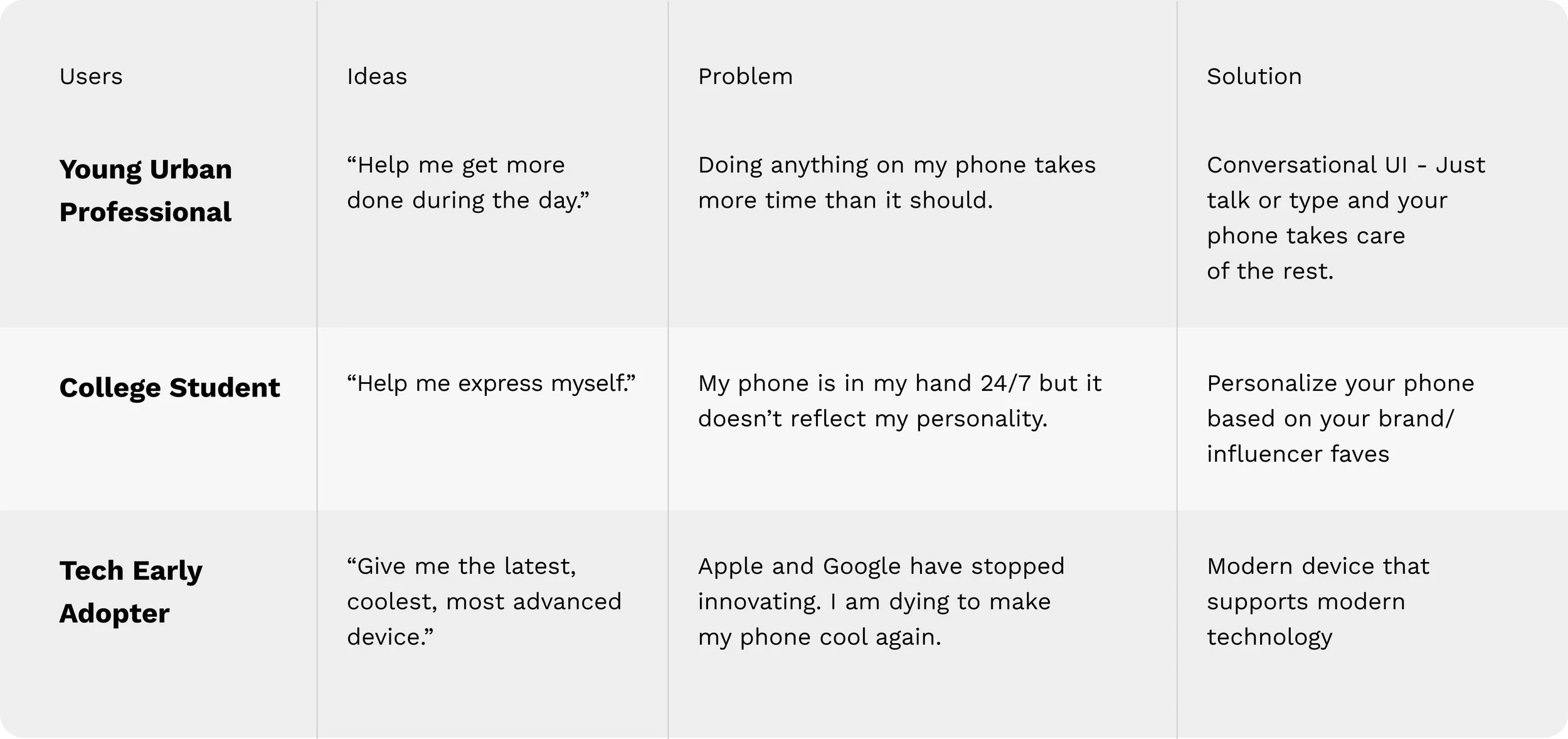
Our process moved in four clear stages:
APPROCH
We started by brainstorming, sketching, and wireframing the core logic of how a user would talk to an AI concierge.
1.
Foundations
While the foundation was set, our engineers focused on building the complex AI technology in the background.
2.
Technical Build
We worked closely as a team to sync our progress and test the AI’s responses to make sure they felt natural.
3.
Internal Testing
After a year of development, I partnered with my Design Lead to execute the visual design phase. My role was to translate our foundational ideas into the final high-fidelity interface, ensuring every interaction felt polished and intuitive.
4.
High-Fidelity UI
QUOORI PHONE SYSTEM
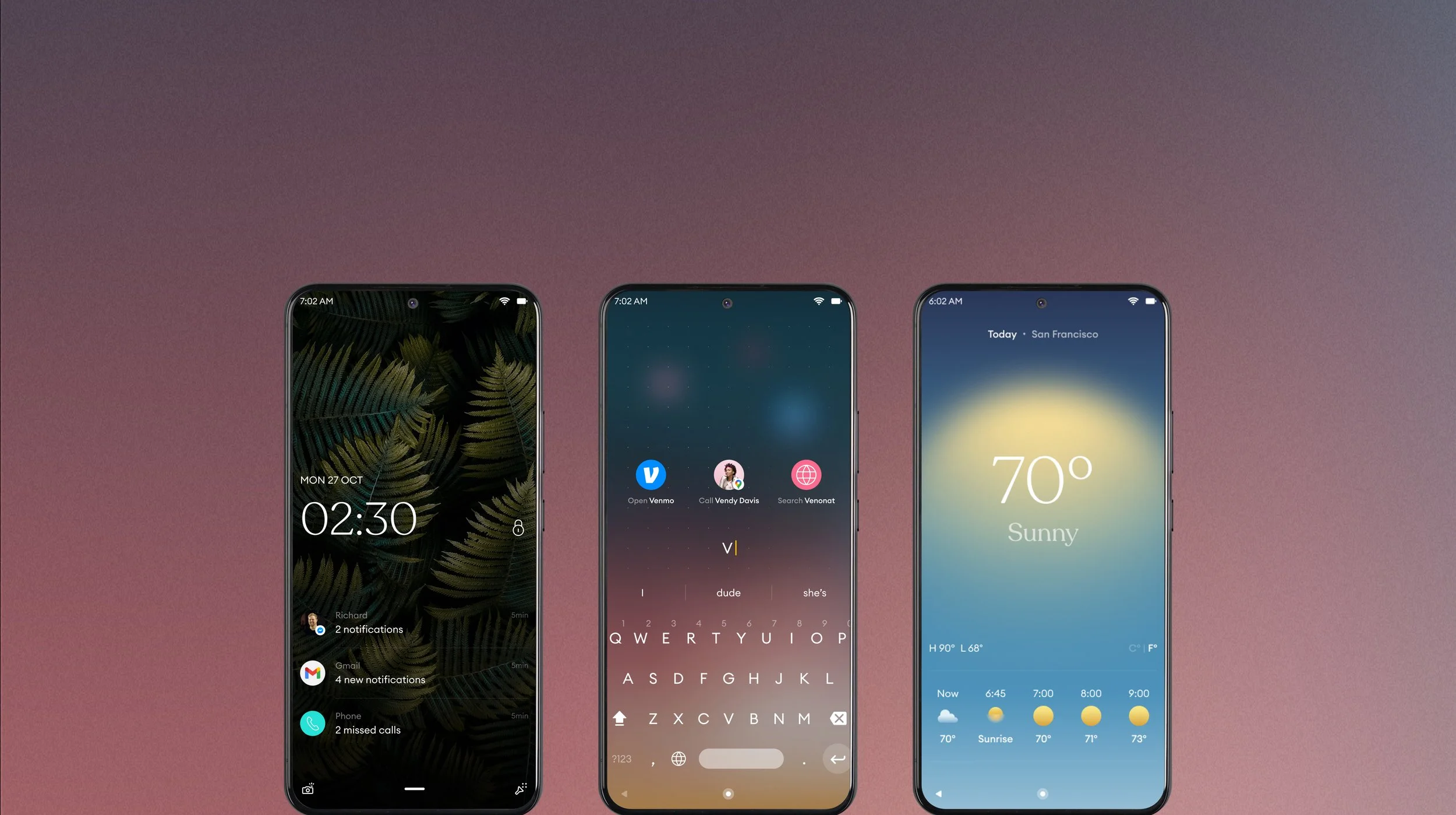
The Quoori OS moves away from the traditional "App-Grid" model, replacing it with an AI assistant-led experience.
The Universal Input allows users to interact naturally through language, meeting the growing expectation for faster, more responsive digital experiences. No longer restricted to typing, users can communicate through voice, drawing, or taking a picture, allowing the interface to adapt to their intent.
The Quoori Concierge: A System of Intelligence

CONVERSATION UI
The ‘Skills’ Framework
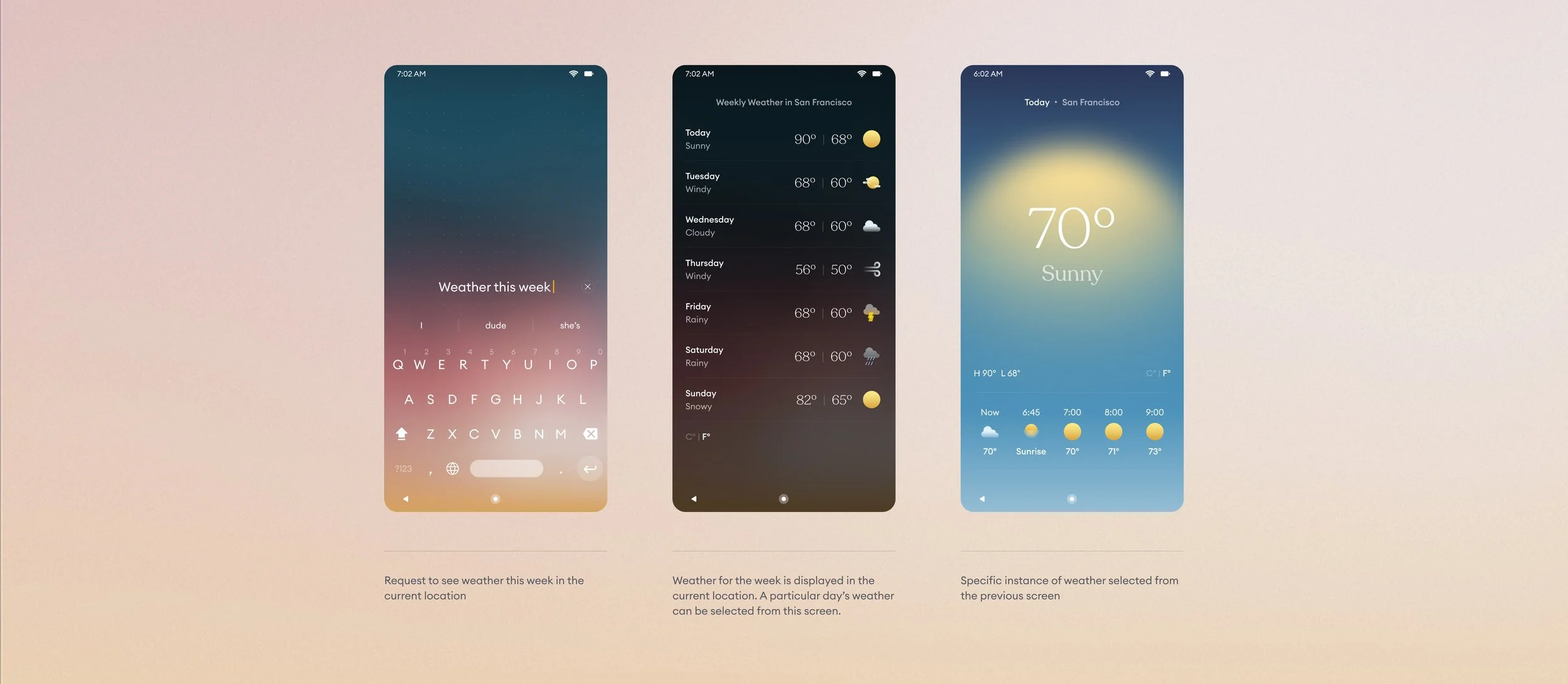
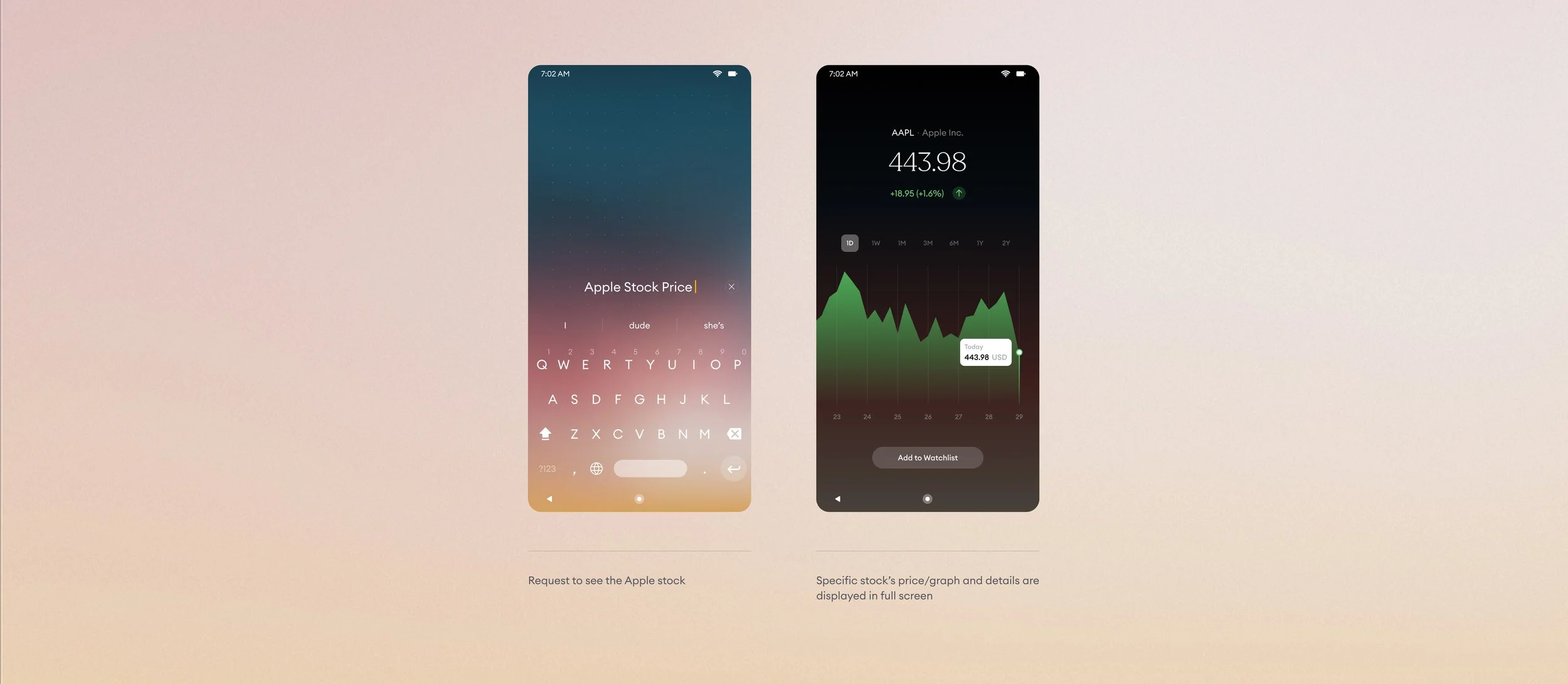
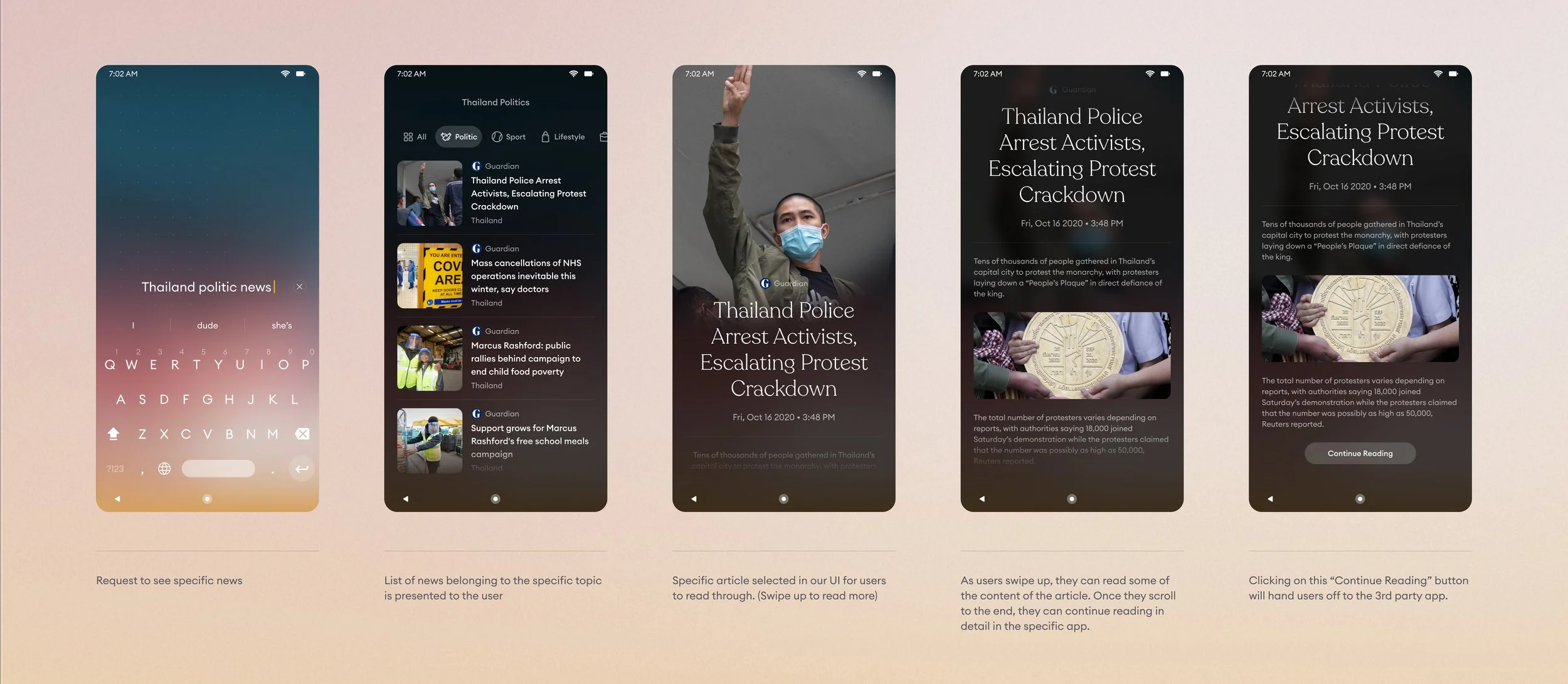
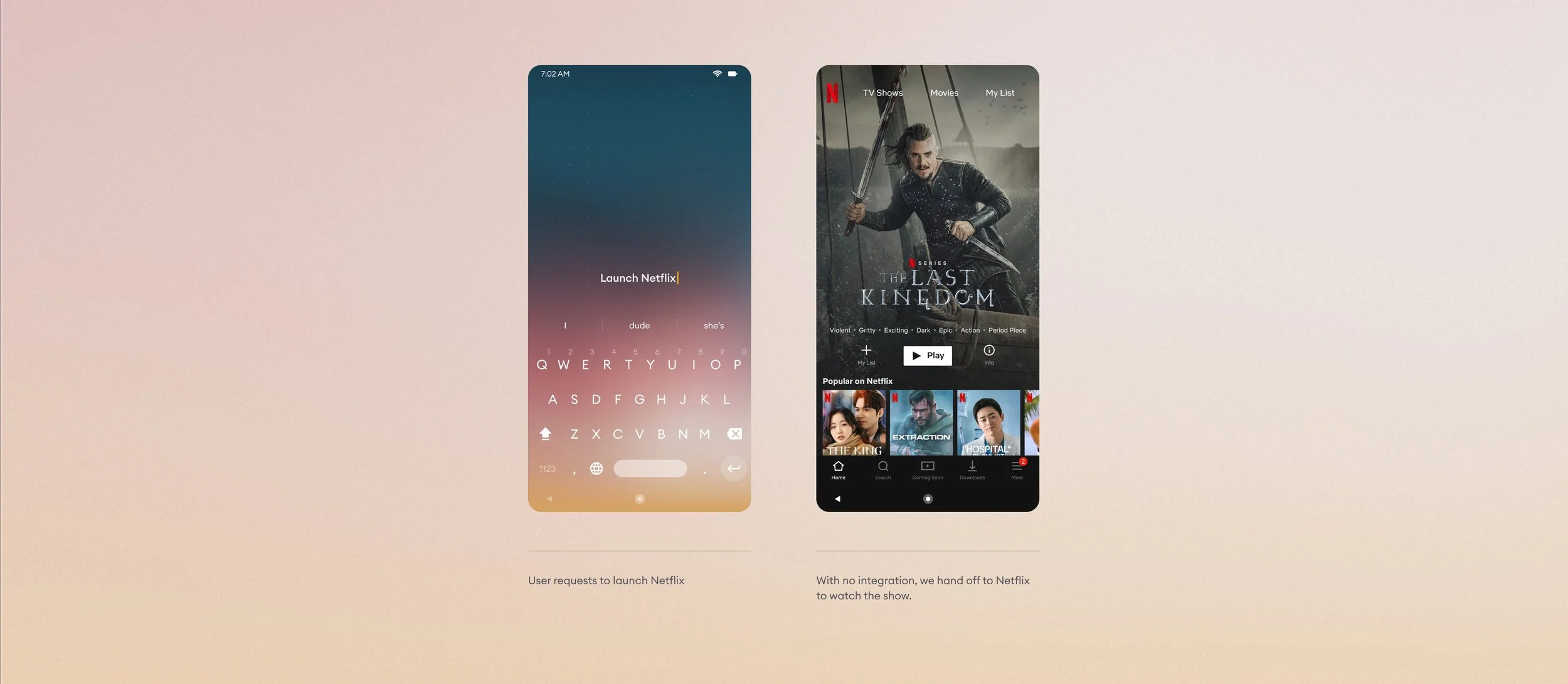
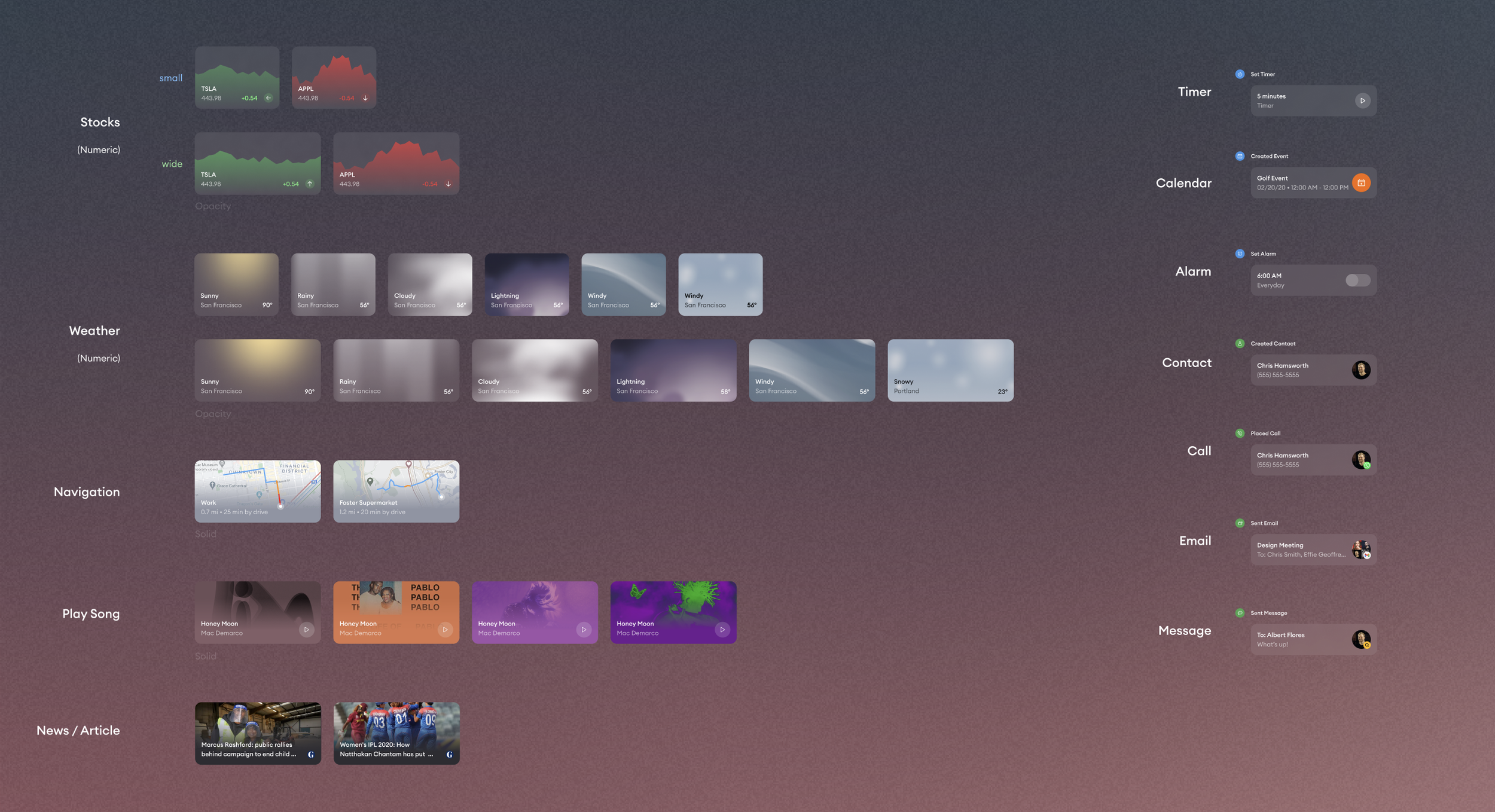
To solve the problem of disconnected apps, we developed a modular system called ‘Skills’. Instead of forcing users to jump between different interfaces, the Concierge pulls functionality directly into the conversational UI through three types of interactive objects — Display Objects, Work Objects, and Handoffs.
Display Objects: Surfaces real-time information—such as weather updates or stock market data—directly in the view.
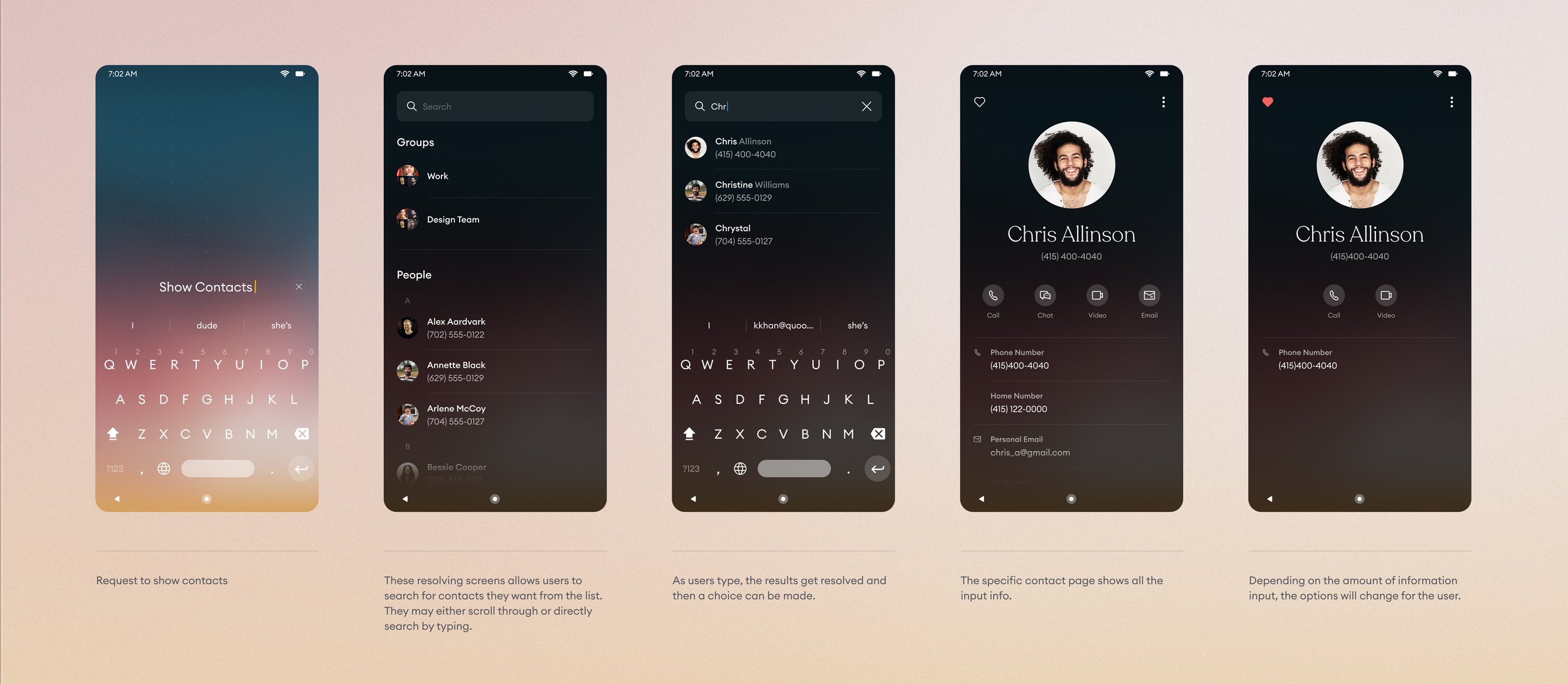
Work Objects: Actionable modules for task completion—such as drafting an email or creating a calendar. These can be minimized and resumed later for seamless multitasking.
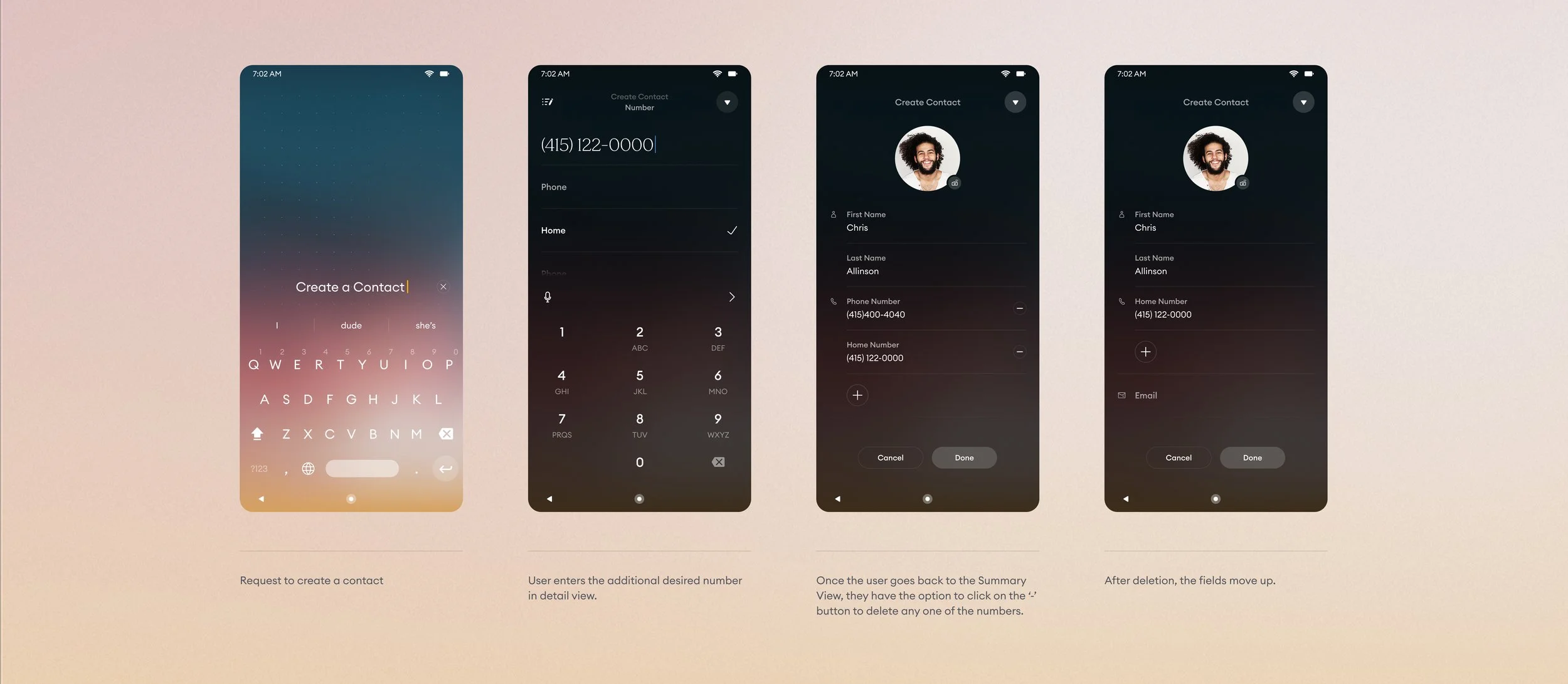
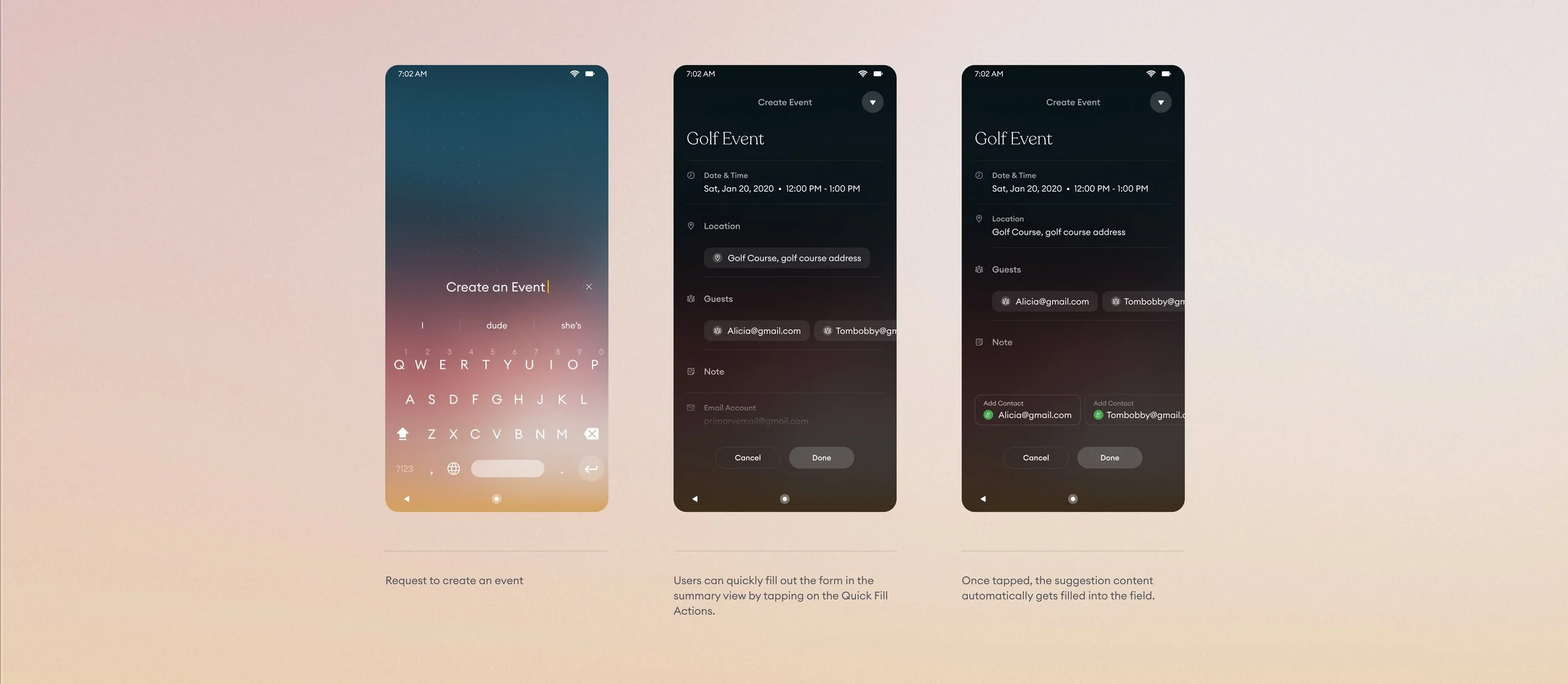
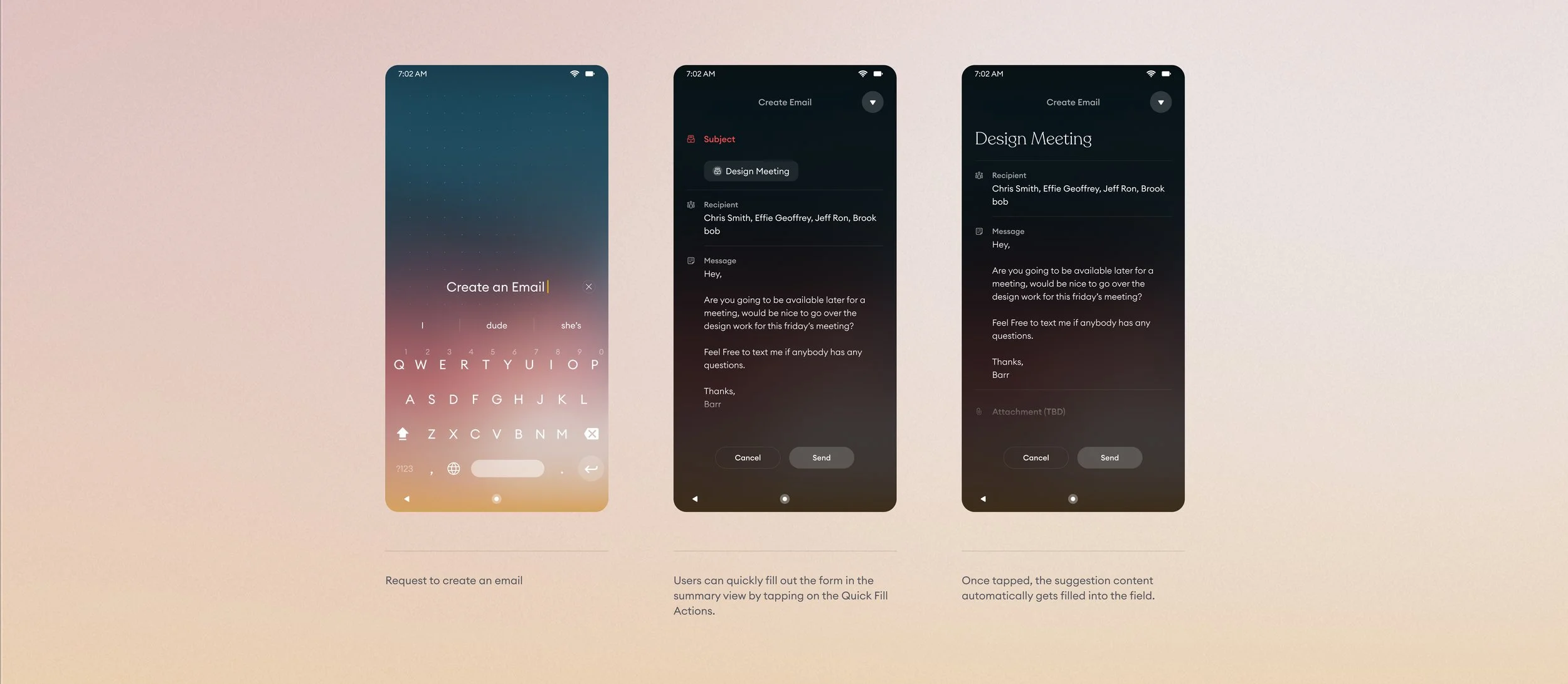
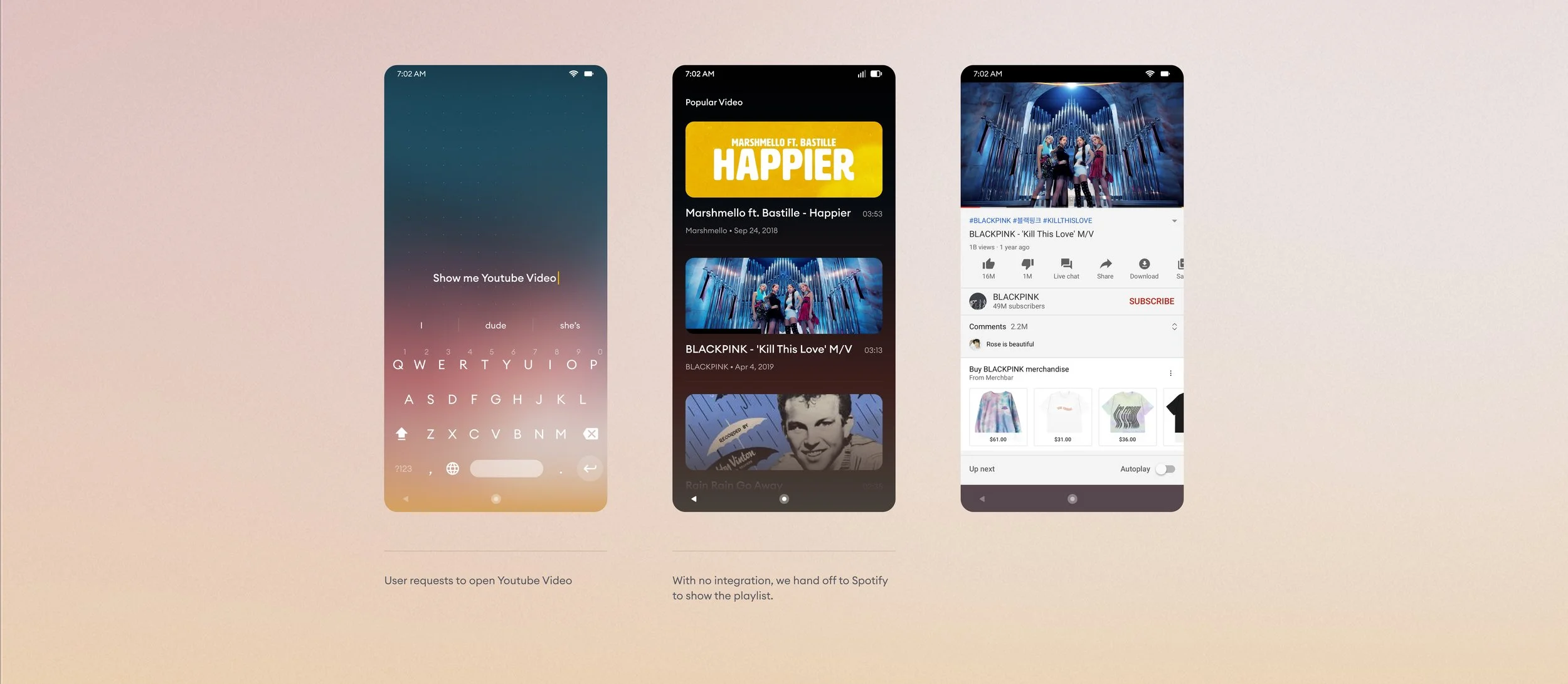
Handoff: If a task cannot be fully completed or information cannot be surfaced within the conversational UI, the system intelligently hands the task off to the relevant third-party app.
The History Screen: Persistence & Continuity
HISTORY
Users can access the ‘History Screen’ by swiping right from the Home Page. This view centralizes all past interactions, ensuring users can quickly revisit through three distinct types of objects:
1. Completed Work Object History
2. Dynamic Work Object - Updates with relevant information when opening history.
3. Handoff History Object
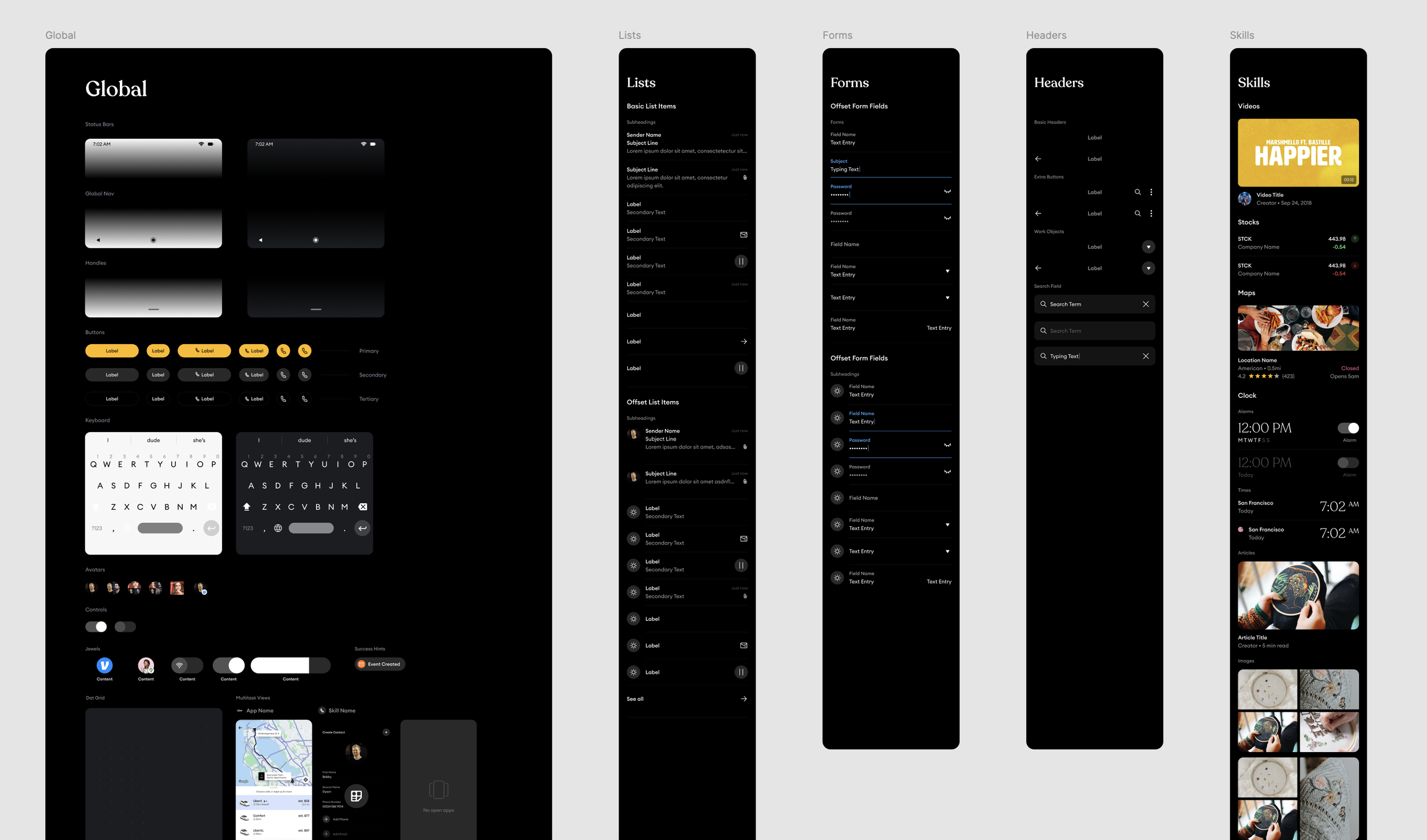
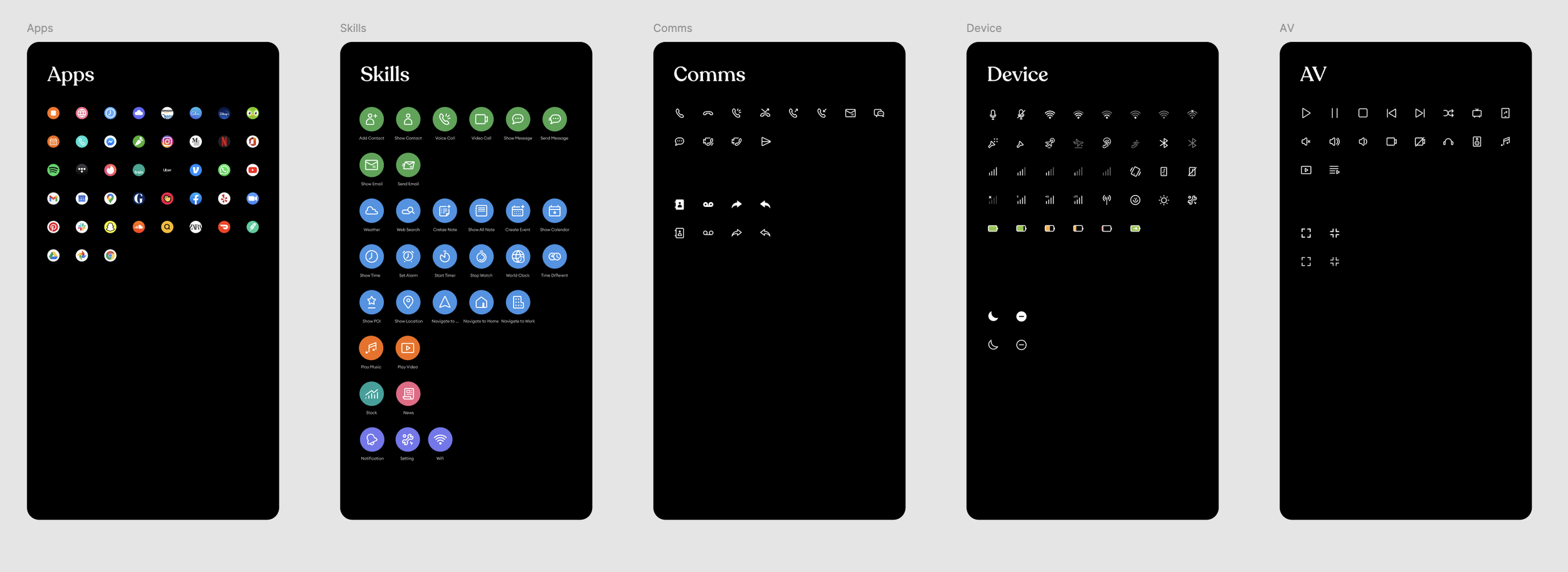
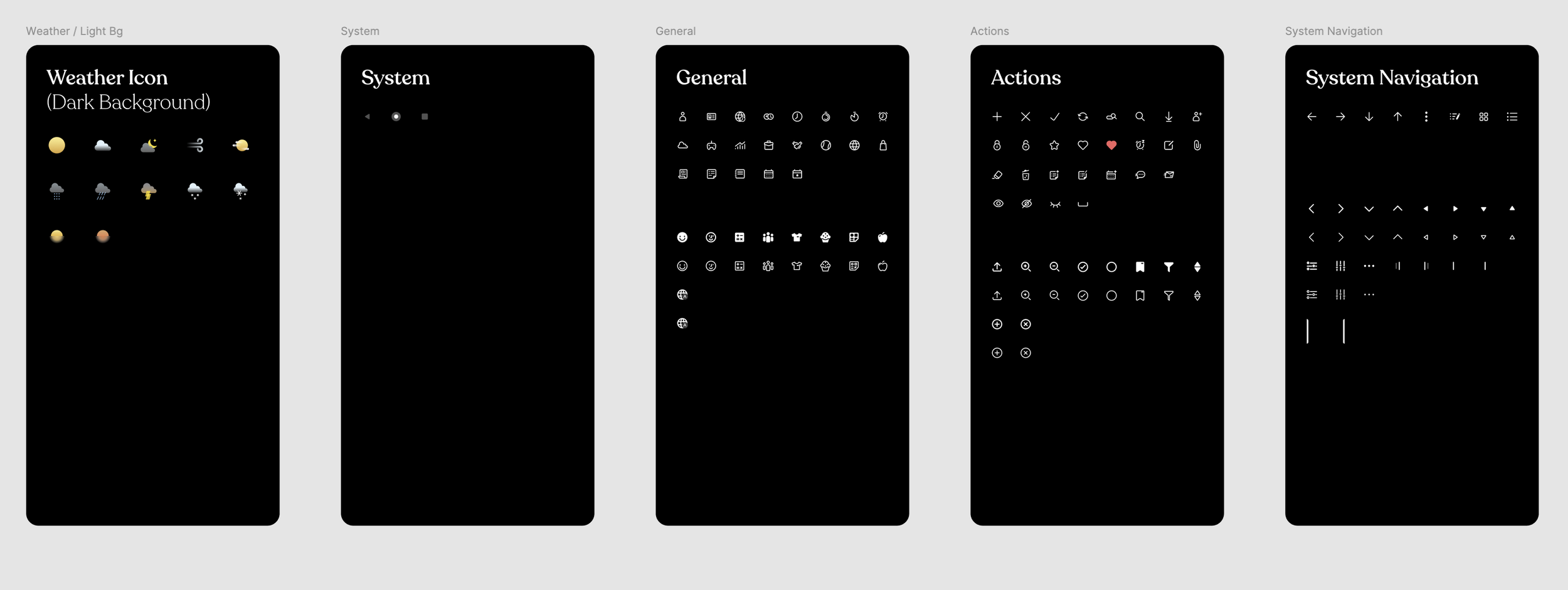
DESIGN SYSTEM
Design System: Building the Foundation
From initial concept to a fully realized platform, I co-developed the foundational design system for Quoori. The goal was to establish a visual language that ensures consistency across the entire OS while allowing the product to scale efficiently in the future.